Shopify + Klaviyo: What's Actually Working
Shopify + Klaviyo: What's Actually Working in 2026
Last Updated: February 2026 • Based on managing Klaviyo accounts for DTC Shopify brands across fashion, food, beauty, and lifestyle.
Shopify + Klaviyo is the default email marketing stack for DTC ecommerce, and for good reason. Shopify invested $100M in Klaviyo during its IPO. The two platforms share a deeper integration than any competing ESP, and that gap keeps widening. If you're running a Shopify store and not using Klaviyo for email and SMS, you're working harder than you need to.
But "installed and connected" is not the same as "set up well." We manage Klaviyo for Shopify brands across verticals and price points, and most accounts we audit have the same gaps. This Shopify Klaviyo guide covers what actually matters when running this stack—the integration details most brands miss, the revenue benchmarks you should be hitting, and the integrations that are worth your time at each stage of growth.
Getting the Integration Right
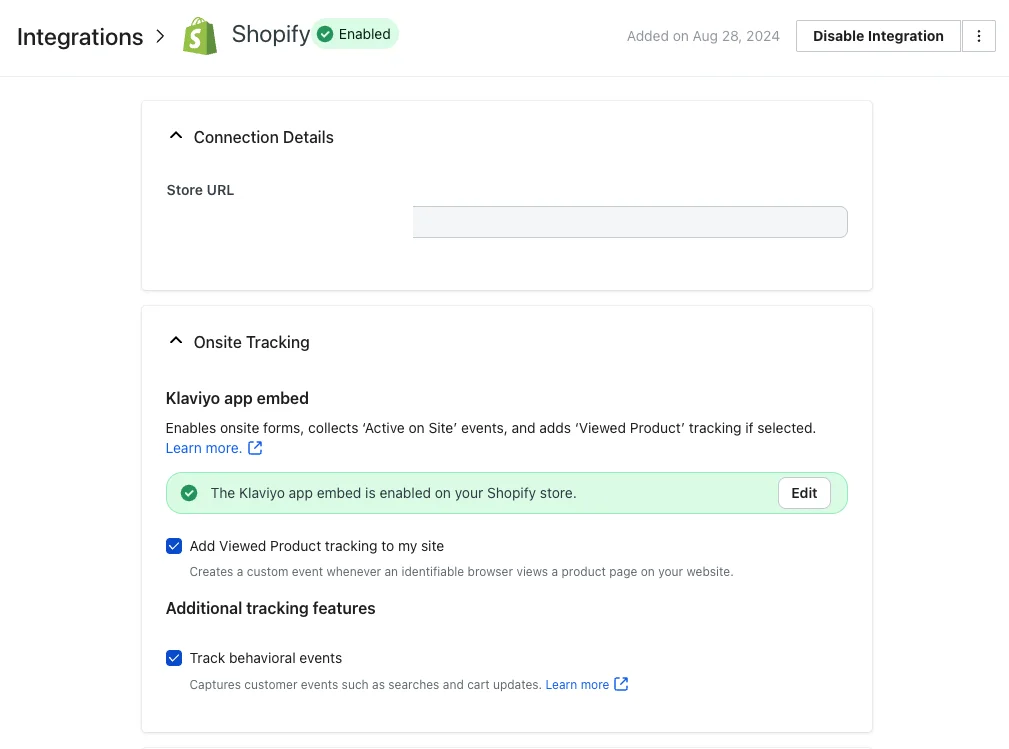
Connecting Klaviyo to Shopify takes about 30 minutes. Install the Klaviyo app from the Shopify App Store, authorize the connection, and your customer data starts syncing. That part is easy. The part most brands skip is what comes next.
1. Set Up Your Branded Sending Domain
This is the DNS configuration that lets you send from mail.yourbrand.com instead of a generic Klaviyo domain. It directly impacts deliverability—inbox providers trust emails from authenticated, branded domains more than shared ones. We see this misconfigured or missing in a surprising number of accounts. Set up your DKIM and SPF records before you send a single email.
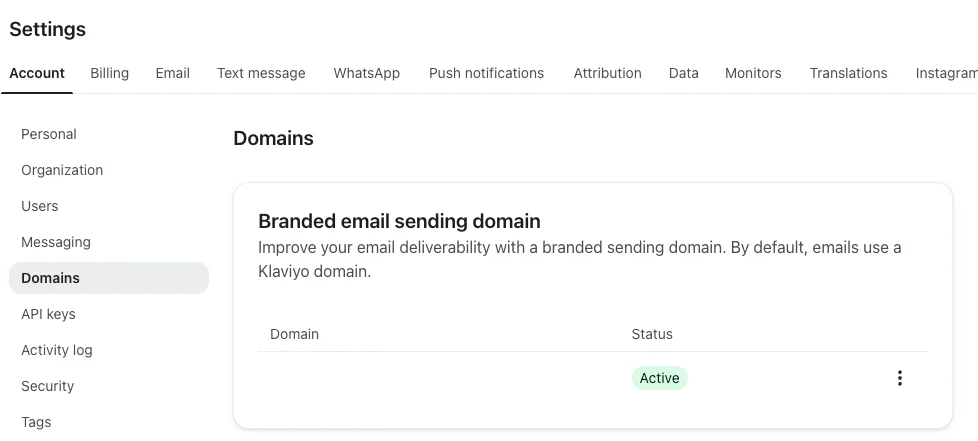
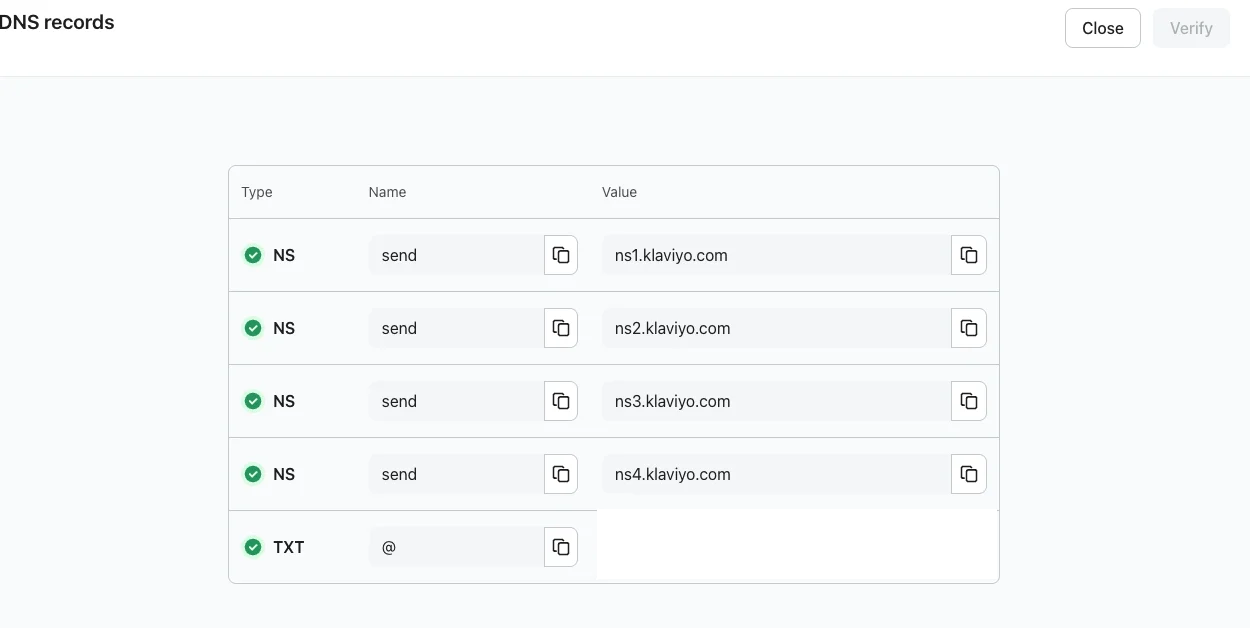
Once you've started the setup in Klaviyo, it generates the DNS records you need to publish at your domain registrar. You're adding four NS records pointing to Klaviyo nameservers plus a TXT record—Klaviyo verifies them automatically and flips the domain to active.
2. Configure Add to Cart Tracking
Klaviyo recently changed how Add to Cart tracking works with Shopify. It used to require a JavaScript snippet in your theme. Now it integrates at the Shopify server level through the Shopify app settings inside Klaviyo, which means more accurate data and more events captured—including headless setups and custom themes that the old snippet missed. Make sure this is enabled and configured in your Klaviyo Shopify integration settings, not relying on a legacy code snippet.
3. Install the Viewed Product Snippet
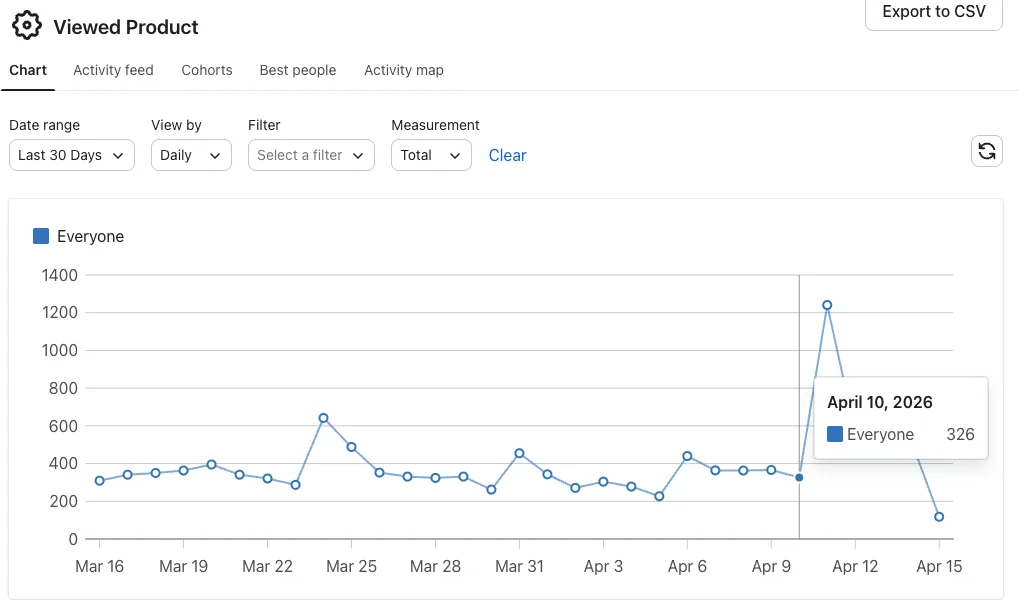
Unlike Add to Cart, the Viewed Product event still requires a custom code snippet added to your Shopify theme. Without it, you can't build browse abandonment flows—one of the highest-performing automations for ecommerce. We see this missing in probably half the accounts we audit. It takes five minutes to install but most brands don't realize it's not included in the default integration.
Once the snippet is live, you should see Viewed Product events firing in the Klaviyo metric stream within a day or two. If the chart is flat, the snippet isn't installed correctly—usually it's missing from product page templates for custom or headless themes.
4. Backfill Your Historical Data
When you first connect Klaviyo to Shopify, make sure the sync settings are configured to backfill your existing customer and order data. This gives Klaviyo the historical context it needs for segmentation, predictive analytics, and customer lifetime value calculations from day one—rather than starting from zero.
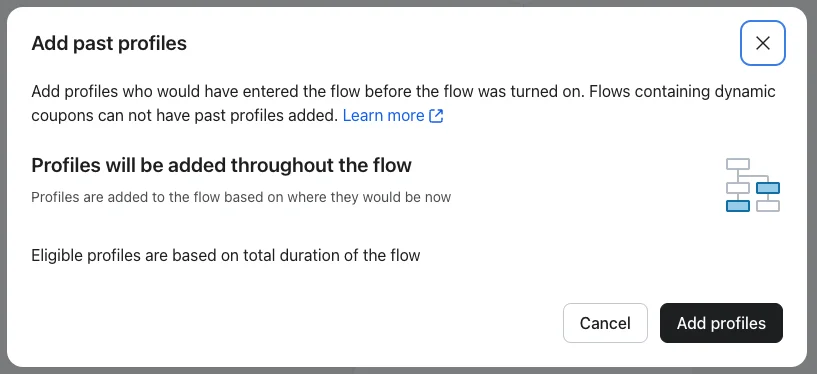
The same logic applies at the flow level. When you build a new flow, Klaviyo gives you the option to add past profiles so people who would have entered the flow before it was live get dropped in at the correct step. Skip this and you leave weeks of real revenue on the table.
5. Migrate Transactional Emails to Klaviyo
This is the one almost nobody does, and it's one of the highest-value moves you can make. Shopify's default transactional emails (order confirmations, shipping notifications, delivery updates) are buried in your Shopify settings. You get almost no performance data on them, and most brands never look at them.
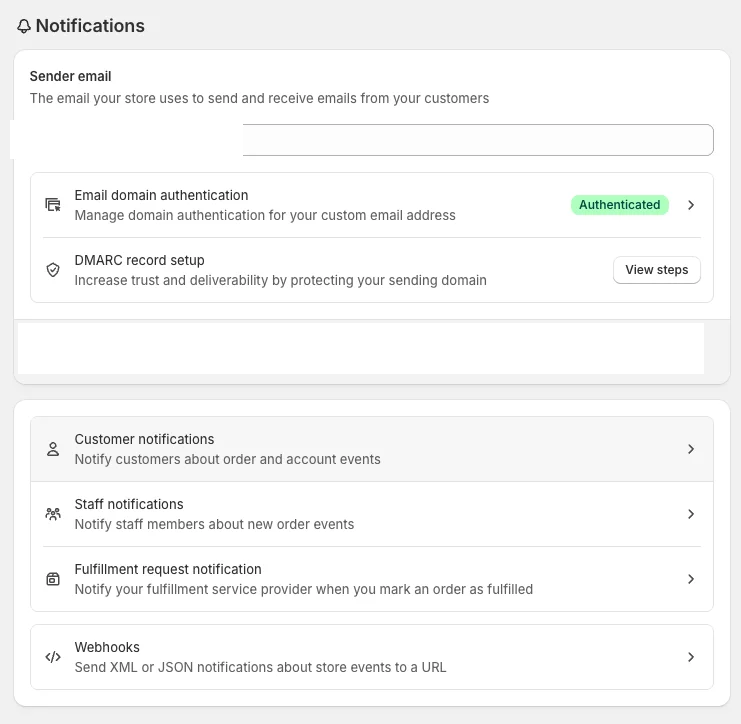
Click into Customer notifications in Shopify and you'll see the full list of transactional emails the platform sends on your behalf—order confirmation, shipping, delivery, draft orders, local pickup. None of them are tracked, none of them are branded well, and none of them feed back into your flows.
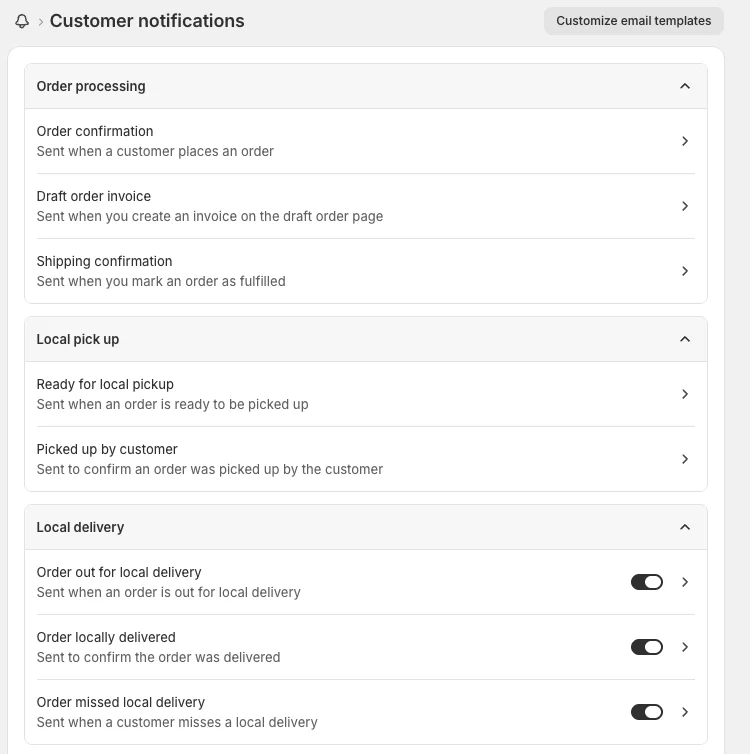
Move them to Klaviyo and suddenly you have open rates, click rates, and revenue attribution on every transactional email. You can customize the design to match your brand, add cross-sell product blocks, and actually see how these emails perform. Transactional emails have some of the highest open rates of any email type—you should know what's happening with them.
What's Changed in the Klaviyo + Shopify Stack
Because Shopify has a direct equity stake in Klaviyo, the two platforms develop features together in a way that no other ESP can match. Here's what's actually meaningful:
Server-level event tracking. The Add to Cart integration moved from a client-side JavaScript snippet to a server-level Shopify integration. This is a big deal—it captures events more reliably, works across custom themes and headless setups, and gives you richer data. If you're still running the old snippet, switch over.
Dynamic product data. Klaviyo can pull product images, prices, descriptions, and URLs directly from your Shopify catalog in real time. This means your automated emails always show current pricing and inventory—no manual template updates when products change. The data flows both ways: Shopify purchase and customer data feeds into Klaviyo for segmentation, and Klaviyo can render Shopify product data dynamically in every email.
Klaviyo Reviews. Klaviyo launched its own native reviews product, which means you can collect, display, and trigger flows based on review data without any third-party integration. For brands that don't need the advanced features of a dedicated reviews platform, this eliminates an extra tool and keeps everything in one place.
Continuous feature releases. New capabilities ship regularly—improved predictive analytics, better SMS/email coordination, deeper Shopify checkout integration. The direction is clear: Klaviyo is becoming the default communication layer for Shopify stores, not just an email tool.
Revenue Benchmarks: What "Good" Looks Like
The industry benchmark for email and SMS revenue as a percentage of total store revenue is around 30%. Across our client accounts, we see healthy brands landing in the 25-45% range. To put those numbers in perspective, it helps to calculate your real Shopify fees first—knowing your actual platform costs makes it easier to evaluate whether your email channel is pulling its weight.
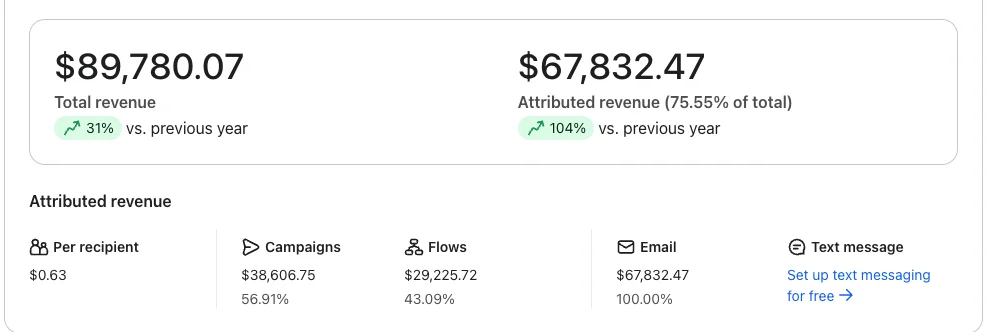
Here's what the attribution view looks like in a real client account. Total store revenue on the left, Klaviyo-attributed revenue on the right, with a campaigns vs. flows split underneath. The number you're looking at is attributed revenue ÷ total revenue. In this example the brand is at 75.55%, which is well above the healthy range and a textbook case for the next paragraph.
Where you fall in that range tells you something:
- Above 45%: Your email program is strong, but you're probably under-investing in top-of-funnel acquisition. You're extracting maximum value from existing customers but not bringing enough new ones in. Time to scale paid ads, influencer partnerships, or content marketing.
- 25-45%: Healthy range. Keep optimizing.
- Below 25%: Something's off. It could be your email program (missing flows, not sending campaigns, poor segmentation). But it could also be a product problem—brands selling a single hero SKU with no replenishable or add-on products naturally have lower email revenue because there's less to buy again. Or it could be a customer experience issue. We've audited accounts where 70% of customer complaints were about delayed shipping—no amount of email optimization fixes that.
Within that email/SMS revenue, expect a roughly 50/50 split between flows and campaigns. If your flows are doing 80%+ of the work, you're not sending enough campaigns. If campaigns dominate, your flows are probably incomplete or outdated. Use our LTV Calculator to see how improving retention shifts your customer lifetime value, and our Churn Calculator to benchmark your retention rates.
Not sure where your Shopify + Klaviyo setup stands? We offer free email audits for DTC brands doing $50K+/month.
The 5-Point Klaviyo Health Check
When we take over a Klaviyo account, we always look at the same five things first. If you want to self-diagnose, start here. For the full audit framework, see our quarterly email audit guide.
1. Pop-up Collection Rate
Are you collecting emails and SMS subscribers from site visitors at a reasonable rate? Your pop-up is the top of the email funnel. If it's not converting, nothing downstream works well. Look at your signup rate relative to site traffic—if it's under 3%, your offer, timing, or design needs work.
2. Campaign Consistency
Are you sending campaigns regularly to the right segments? The biggest mistake we see is brands not sending. If you go quiet, you become irrelevant—no clicks back to your site means no flows get triggered, no browse abandonment fires, and your customers forget you exist. Campaigns need to be customer-centric: showcase the product, talk about real problems you solve, tell stories. Not just "here's a bunch of stuff on sale."
3. Segmentation Quality
Are you segmenting by purchase behavior, or just blasting your full list? The answer should be somewhere in between. Sending to everyone is wasteful. Only sending to your "30-day engaged" segment is lazy and leaves money on the table. Segment by customer vs. non-customer, first-time vs. repeat buyer, lapsed customers, and purchase recency. Build your segments quickly with our free Klaviyo Audience Builder.
4. Deliverability
Are you in a healthy range for open rates, click rates, unsubscribes, and spam complaints? This matters—but don't overindex on it. We see brands obsess over a 95% deliverability score while sending to a tiny, over-filtered audience. A perfect score means nothing if you're only reaching a fraction of your list. The goal is healthy metrics at volume, not perfect metrics at the expense of revenue.
5. Flow Coverage
Do you have the foundational flows built and running? At minimum: welcome series, abandoned cart, abandoned checkout (these are two different flows—don't combine them), browse abandonment, post-purchase, and sunset/winback. Check that the filters are correct, the timing makes sense, and nothing critical is missing. Plan your flow architecture with our Klaviyo Flow Builder.
Which Integrations Actually Matter (and When)
The Shopify + Klaviyo ecosystem has dozens of integrations. Not all of them are worth your time—and the ones that are depend on what stage your brand is at.
Start Collecting Reviews Immediately
This is the one integration every Shopify brand should set up early, regardless of size. Reviews provide social proof that drives conversion, and the sooner you start collecting them, the more you'll have when it matters. Your options:
- Klaviyo Reviews — Simplest option. Native to Klaviyo, no extra integration needed, data flows automatically for flow triggers and segmentation.
- Okendo, Yotpo, or Stamped — More advanced features: photo reviews, Q&A, UGC galleries. Worth the extra cost if you need those capabilities.
Upsells and Cross-sells: When You Have Traffic
In-cart upsell tools like Bold Upsell or In Cart Upsell drive additional revenue by suggesting complementary products at checkout. These make sense once you have consistent traffic and a product catalog with natural cross-sell opportunities. If you're only selling one product, skip this.
Subscriptions: When You Have a Replenishable Product
ReCharge and Skio integrate with Klaviyo to trigger flows around subscription lifecycle events—upcoming renewals, skipped orders, cancellations. Critical if you sell consumables. Irrelevant if you don't.
Customer Service: When Volume Demands It
Gorgias syncs customer support data with Klaviyo, letting you segment based on support interactions and suppress customers with open tickets from promotional campaigns. Useful at scale, not necessary for smaller operations.
Loyalty and Referral: Not Until Mid-Six Figures
Tools like Smile.io for loyalty programs and referral incentives integrate with Klaviyo for automated reward notifications and point balance updates. But we almost never recommend these for smaller brands. The ROI at early stages is negligible—you're optimizing a system that doesn't have enough volume to matter. Loyalty and referral programs start to make sense when you're consistently doing mid-six figures or more in monthly revenue and have a strong base of repeat customers to build on.
Direct Mail: When You've Maxed Digital Channels
PostPilot integrates with Klaviyo segments to trigger physical postcards to customers who aren't responding to email or SMS. We've seen 2-45x ROAS depending on the brand and use case. It's not for everyone, but for brands with higher AOVs and unengaged segments, it's a strong add.
The Bottom Line
The Shopify + Klaviyo stack works. The integration is deep, the data flows both ways, and the two platforms are only getting closer. The problem is rarely the tools—it's how they're configured and used.
If you take one thing from this Shopify Klaviyo guide: don't just install and forget. Get the integration details right (branded domain, Add to Cart, Viewed Product, transactional migration). Build your core flows. Send campaigns consistently. And revisit the whole thing quarterly—because what "good" looks like changes as your brand grows.
Frequently Asked Questions
How long does it take to set up Klaviyo with Shopify?
The basic integration takes about 30 minutes—install the app, connect your store, and backfill your historical data. But the real setup (branded sending domain, Add to Cart tracking, Viewed Product snippet, core flows, and segments) typically takes 2-4 weeks to build properly. Most brands start seeing measurable results within the first month after launching their welcome and abandoned cart flows.
What percentage of revenue should come from email for a Shopify store?
The industry benchmark is around 30% of total revenue from email and SMS combined. Healthy brands typically fall in the 25-45% range. Above 45% usually means you need to invest more in top-of-funnel acquisition. Below 25% can indicate a product problem, a customer experience issue, or an underperforming email program. Use our Klaviyo Bill Reducer to make sure you're not overpaying while you optimize.
Should I use Klaviyo Reviews or a third-party review app?
Klaviyo Reviews is a solid choice for brands that want the simplest setup—it's native to Klaviyo, the data flows automatically, and you can trigger flows based on review activity without any extra integration. Third-party options like Okendo, Yotpo, or Stamped offer more advanced features (photo reviews, Q&A, UGC galleries), but they add cost and complexity. Start with Klaviyo Reviews unless you have a specific need for those extras.
What's the difference between Klaviyo flows and campaigns?
Flows are automated sequences triggered by customer behavior—someone abandons a cart, makes a purchase, or signs up. They run 24/7 without manual intervention. Campaigns are one-time sends to a segment—product launches, sales, newsletters. A well-run Klaviyo account generates roughly 50/50 revenue between flows and campaigns. If your flows are doing 80%+ of the work, you're not sending enough campaigns.
Do I need to migrate transactional emails from Shopify to Klaviyo?
You don't have to, but you should. Shopify's transactional emails are buried in settings and give you almost no performance data. Moving them to Klaviyo gives you open rates, click rates, and revenue attribution on every transactional email—plus the ability to customize the design and add cross-sell blocks.
Want Us to Audit Your Shopify + Klaviyo Setup?
We manage Klaviyo for DTC Shopify brands across fashion, food, beauty, and lifestyle. See our services and pricing, or book a free call and we'll walk through your integration, flows, and campaign performance.